
Cedar Fence Styles Compared: Privacy, Picket, Horizontal
When it comes to deciding on a style for your fence, there are more considerations than simply choosing a style and having it installed. Homeowners need to consider how the fence will affect their outdoor living space, the look of their home from the street, and the style of yard that they have. The material that is used for the fence is also a very important consideration.
Cedar is by far the most popular choice for residential fencing made from wood. It is a very attractive and durable material, with a rich color and a very pleasant smell. It is also very long-lasting and can look great for many years. While choosing to use cedar is a great first step, there is much more to consider.
The style of the fence that you choose will have a huge impact on the overall look of your yard, the level of privacy that you have, and the amount of maintenance that your fence will require. By learning about the most popular cedar fence styles, you will be able to match the style of your fence to your specific needs and ensure that you are getting the most from your fencing investment. This article will provide a comprehensive overview of the most popular types of cedar fences—Cedar Fence Styles Compared: Privacy, Picket, Shadowbox, Horizontal. We will examine the key benefits of each style and the specific features and characteristics that they have to offer.
The Unique Advantages of Cedar Wood
Before diving into specific cedar fence designs, it is important to understand why cedar is such a highly recommended material. Unlike pine or spruce, cedar naturally contains tannins and oils that protect it against insects and decay.
Wood Types and Rot Resistance
When evaluating options, you will likely encounter a debate between Western Red Cedar vs incense cedar.
- Western Red Cedar: Sourced primarily from the Pacific Northwest, this wood is famous for its rich, varied coloration—ranging from light amber to deep honey brown. It boasts a very straight grain, making it less prone to warping.
- Incense Cedar: Often grown in California and Oregon, incense cedar is slightly lighter in color and highly aromatic. It machines exceptionally well and is highly durable.
In a cedar fence rot resistance comparison, both species perform admirably. Thanks to their natural extractives, both woods easily outlast untreated softwoods, especially in damp or humid climates.
Choosing the Right Grade
Understanding how to choose the right cedar fence grade is vital for the longevity of your investment. Cedar is typically graded by its appearance and structural integrity:
- Clear Grade: The highest quality, featuring no knots. It offers a premium, modern look but comes at a higher price.
- Select/Premium Grade: Contains a few tight knots but remains structurally flawless.
- Number 2 (No. 2) or Standard: Features more prominent knots and natural imperfections. It is the most common and cost-effective grade for rustic or traditional fence styles.
Lifespan and Weathering

Homeowners often ask: how long does a cedar fence last without staining? If left completely untreated, a cedar fence will gracefully weather to a silvery-gray patina and can still last anywhere from 15 to 20 years, depending on your climate and soil moisture. However, applying a high-quality penetrating stain and UV protectant can extend its lifespan to 25 or even 30 years by preventing the wood fibers from drying out and cracking under the sun.
Style 1: Solid Privacy Cedar Fences
What's the first thing that comes to mind when thinking of a backyard retreat or oasis? A solid privacy fence, perhaps? Vertical boards of wood are attached to each other from the ground up to seal in your yard and keep prying eyes from the outside world.
Design and Functionality
Among cedar privacy fence styles, the two most common are the traditional dog-ear cut and the flat-top design with a cap rail to finish off the top. Both styles can be incredibly beautiful with the right staining and are a great backdrop to any yard's landscaping. The standard height of residential wood fences is 6 feet high, but an 8-foot-high fence is permitted in many residential yards, while front yard fences are generally capped at 3 or 4 feet high.
Weighing the Options
The pros and cons of a solid privacy fence are many, and you should definitely take them into consideration before deciding on a style and starting your fence project.
- Pros: Complete visual seclusion, seclusion from noise, fences can be excellent for keeping pets and children contained in your yard, and a solid wood fence can provide a great clean-lined backdrop to your yard's landscaping.
- Cons: A solid fence will block air from entering your yard from the outside, which can make a very small yard feel claustrophobic in the warmer months. In addition, a solid fence can act like a huge sail in very high winds and place a tremendous amount of pressure on your fence posts.
Style 2: The Classic Cedar Picket Fence
A classic American symbol of homeownership is the traditional cedar picket fence . They are generally designed as decorative border fencing, rather than privacy fencing. The vertical pickets are attached between horizontal rails.
Customizing the Spacing
To achieve a semi-privacy look, one can alter the picket spacing to provide the desired level of obscurity. The typical spacing for semi-privacy picket fences is 1--2 inches between pickets for maximum privacy with light and air passing through the gaps. A more traditional open look is achieved by increasing the picket spacing to 3--4 inches between pickets.
Budget Considerations
For those comparing the cost of a cedar picket fence to a privacy fence, a picket fence is generally the more affordable option. Since a picket fence has gaps between the pickets, it typically requires less lumber to complete the project. In addition to the reduced amount of material needed, a picket fence is generally a shorter fence, typically 3--4 feet tall. The result is an extremely cost-effective method to add tremendous curb appeal to a home.
Style 3: The Shadowbox Fence (The Neighbor-Friendly Option)
The Shadowbox is a great option for those looking for a private fence in high winds or those who simply want to have a fence that looks the same on both the inside and outside of your yard.
Want to learn more about cedar fences? Visit our other articles!
How It Works
The Shadowbox is constructed by alternating pickets on either side of the horizontal rails, creating a three-dimensional overlapping effect. This style of fence is known to be one of the more neighbor-friendly residential-style fences on the market, as the fence looks the same on the inside as it does on the outside, meaning you won't have to negotiate with your neighbor over who gets to have the ugly side of the fence with the exposed rails.
Shadowbox vs. Board on Board
The Shadowbox style fence is often confused with the Board on Board style of fencing. Many people are not aware of the differences and how they can affect the overall look of your fence and your yard.
- Board on Board: This type of fencing has the pickets overlapping completely on one side of the rail. This type of fence is 100% private as you can't see through the boards from any angle.
- Shadowbox: In this style of fencing, the pickets overlap on opposite sides of the central rail. This creates a solid appearance when viewed straight on but allows a glimpse of the space between the boards when viewed from an extreme angle.
The Ultimate Wind Performer
The Shadowbox style of fence is great for open yards in high winds because the gaps between the boards allow for air to flow through the fence instead of being stopped solid by it. This helps to take pressure off of the fence posts, meaning that the fence will perform better than a solid style fence in high winds. Many homeowners choose to use a Shadowbox style fence made of Western Red Cedar because of the natural ability of the wood to withstand the elements. This makes the Shadowbox the best cedar fence for high winds.
Style 4: Modern Horizontal Cedar Fences
Modern horizontal fences have become a very popular alternative to the traditional vertical style. These fences are typically made of cedar and are installed horizontally across the posts of the fence. The horizontal style of a fence instantly makes the area look longer, wider, and more modern.
Installation Nuances of Modern Horizontal Cedar Fences
When installing a modern horizontal fence, there are many nuances to consider. When looking for a modern horizontal cedar fence installation guide, you will find that a large portion of the information focuses on the proper installation of the posts and the boards. Because the horizontal style of a fence has gravity working against it in a different way than a vertical style of fence, the horizontal style of fence is prone to sagging over time if not installed with the proper support. In order to combat this, most experts recommend installing thicker boards, such as 1x6s or even 5/4-inch decking boards. The spacing of the fence posts is also very important. Instead of installing the posts 8 feet apart like you would with a vertical style of fence, most experts recommend installing the posts 4--6 feet apart. In addition to installing the posts closer together, it is also recommended that you install a vertical center brace between the two posts. This will ensure that the horizontal planks of the fence are staying perfectly aligned.
Managing Uneven Terrain
When installing a horizontal fence design for a sloped backyard, one of the biggest challenges is dealing with the slopes of the yard. With a vertical style of fence, the fence would typically be installed using the racking method. This would mean that the fence would follow the exact contour of the ground. However, when installing a horizontal style of fence, using the racking method would ruin the horizontal lines of the fence. In order to combat this, the horizontal style of fence must be installed using the stepped method. This means that the horizontal boards of the fence will remain perfectly level, but the bottom of the fence will drop down a few inches with each panel. This creates a stair-step effect along the bottom of the fence.
Customizing and Elevating Your Cedar Fence
After choosing a main style of your fence, you can look through many cedar fence ideas in order to make your perimeter more unique.
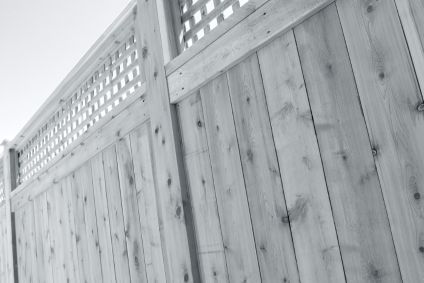
One of the classy ways to do this is to compare the decorative cedar lattice top panels. Adding one foot of lattice to the top of a 5-foot-high solid privacy fence will create a 6-foot-tall fence, but it will no longer look so dull, and it will allow more light to enter your yard.
Also, high-quality post caps will protect the ends of the fence posts from water penetration and will also give the fence a more custom look. There are many different styles of post caps, such as cedar pyramids, copper, and even solar-powered with lights.
Maintenance Requirements for Different Cedar Styles
Cedar is a very durable and long-lasting wood; however, like any wood, it must be maintained to look its best. The maintenance for each style of cedar fence is different depending on the style and the construction of the fence.
- Solid Privacy & Picket: The most maintainable type of cedar fence would be a Solid Privacy & Picket fence. This type of fence has flat surfaces, making it easy to power wash , to stain , and to paint.
- Horizontal Fences: Horizontal fences are a very popular type of fence. The horizontal boards collect a lot of rainwater on the top edges of the boards and also tend to collect a lot of debris, such as falling leaves and dirt. Horizontal fences need to be washed periodically with a hose to wash off any mildew that may start to form on the edges of the boards. Applying a waterproof sealant to the top edges of the boards will also help to prevent mildew from forming.
- Shadowbox Fences: The Shadowbox fence style is a very unique and attractive style of fence. The Shadowbox fence is constructed by overlapping boards. This type of fence is very structurally sound. However, the Shadowbox fence is also one of the hardest styles of fences to stain. Because of the many tight crevices and blind spots between the boards, the wood protectant cannot reach into all of the areas where the brush or roller cannot fit. In order to ensure that the wood is fully protected, an HVLP (High Volume Low Pressure) paint sprayer would be the best choice for maintaining a Shadowbox fence.
In order to keep any style of fence in good shape, annual inspections should be performed. Sprinklers should be checked to make sure they are not constantly hitting the fence. Also, any heavy vegetation or vines should be trimmed back in order to prevent the wood from becoming too wet and rotting. It is also very important to keep the bottom of the fence boards at least two inches above the soil in order to prevent ground-contact rot.
The Importance of Professional Installation
Investing in a fence for your property is a big decision and can be very expensive. While a simple fence made of picket-style wood might be a good do-it-yourself project for someone with experience, a bigger fence to provide privacy, a shadowbox fence, or even a horizontal-style fence is best left to the professionals.
While there are many companies that specialize in cedar fences, you may choose a dedicated cedar fence company; however, it is usually best to hire a fence installation company that can also handle decks and other structures. These companies that specialize in fences know the local zoning codes and will also be able to check for underground utility lines and determine your property lines. In addition, fence companies have the heavy equipment needed to put the posts of the fence deep into the ground, below the frost line. This is very important to keep the fence from heaving up during the winter with the freezing and thawing of the ground. A good fence company will also know how to work with different cedar fence styles, and how to work with the wood to allow for expansion and contraction. They will also know how to put the fence on a slope, and how to build the gates so that they do not sag.
Conclusion
Cedar fences are so beautiful and serve many functions. Not only do they enclose a yard, they frame a home. If you want to have the absolute most privacy, then a solid cedar privacy fence style would be the best choice. On the other hand, if you want to have a fence that allows for a lot of air to move between, the shadowbox style would be a great choice. A picket fence made out of cedar is very traditional and very charming. If you are looking for a modern fence made out of cedar that is very horizontal in style, then that would be a great choice for you as well. Each of these different cedar fence styles has its own unique benefits and can be a great addition to any yard.
It is also very important to know about the different grades of cedar as well as the different species that are available. Each of these different types of fencing also has its own special maintenance needs to keep it looking its best. By knowing the benefits of each of the different fence styles, knowing about the grades and species of cedar, and knowing the special needs that your fence will require, you can create the perfect fence for your yard. This fence will serve to enclose your yard and also to frame your home. It will also serve to add value to your home. Before you begin the process of creating your fence, you should take a little time to evaluate your yard and the wind that it receives from time to time. You should also take a look at the style of the homes in your neighborhood. And you should also take a little time to think about the level of privacy that you require. Once you have taken the time to complete these tasks, you and the company that will be installing your fence can come up with the perfect fence for your home. This fence will be one that is strong and durable and will last for many years to come. It will also be one that is very unique and one that will add a lot of curb appeal to your home as well as value.
Q&A
What is the primary difference between Western Red Cedar and Incense Cedar ? Do they have the same rot resistance?
Both Western Red Cedar and Incense Cedar are extremely resistant to rot and insects due to the tannins and oils that are present in both species of trees. Both trees would make excellent choices for fence construction and will last for a very long time. Western Red Cedar is primarily harvested in the Pacific Northwest and has a rich amber-to-honey color with straight grain characteristics that do not warp. Incense Cedar is primarily harvested in California and the Oregon mountains. It is a light-colored wood that is highly aromatic, machines extremely well with a cross-cut saw, and is extremely durable. It is used for outdoor furniture, deck building, and fencing. In terms of fence construction in very wet or humid locations, both woods have the same level of rot resistance.
I want maximum privacy—what cedar fence style should I choose?
For complete visual seclusion, choose a solid privacy fence (dog-ear or flat-top with cap) or a board-on-board design. Solid privacy fences provide a continuous barrier, while board-on-board eliminates sightlines even at extreme angles for 100% privacy. Typical residential heights are 6 feet (8 feet often allowed in backyards; front yards usually 3–4 feet—check local codes). Keep in mind solid fences restrict airflow and can act like a sail in high winds, increasing post stress.
Which cedar fence performs best in high winds?
The shadowbox style is the top performer in windy areas. By alternating pickets on both sides of the rails, it allows air to pass through, reducing pressure on posts. It also looks the same from both sides (neighbor-friendly). Many homeowners pair this design with Western Red Cedar for enhanced weather performance.
How long will a cedar fence last, and do I need to stain it?
Left untreated, cedar typically lasts 15–20 years and weathers to a silvery-gray patina. Applying a high-quality penetrating stain with UV protection can extend lifespan to 25–30 years by reducing sun damage and checking. Climate and soil moisture influence longevity either way.
What are the key installation nuances for modern horizontal cedar fences?
Horizontal fences are prone to sagging without added support. Use thicker boards (1x6 or 5/4-inch decking), set posts closer together (4–6 feet instead of the typical 8), and include a vertical center brace between posts to keep planks aligned. On sloped yards, install with a stepped pattern (not racked) to preserve level horizontal lines.
Which cedar fence styles are easiest to maintain, and what routine care is recommended?
Solid privacy and picket fences are the easiest to wash, stain, and paint due to their flat surfaces. Horizontal fences collect water and debris on top edges—hose them off periodically and consider a waterproof sealant on board tops. Shadowbox fences are sturdy but hard to stain thoroughly; use an HVLP sprayer to reach tight crevices. For all styles, perform annual inspections, adjust sprinklers so they don’t hit the fence, trim back vines/vegetation, and keep boards at least two inches above soil to avoid rot.
Looking for a fence Insallation company? Contac us today!1
